
15 British 1980s Trends That Are Suddenly Cool Again
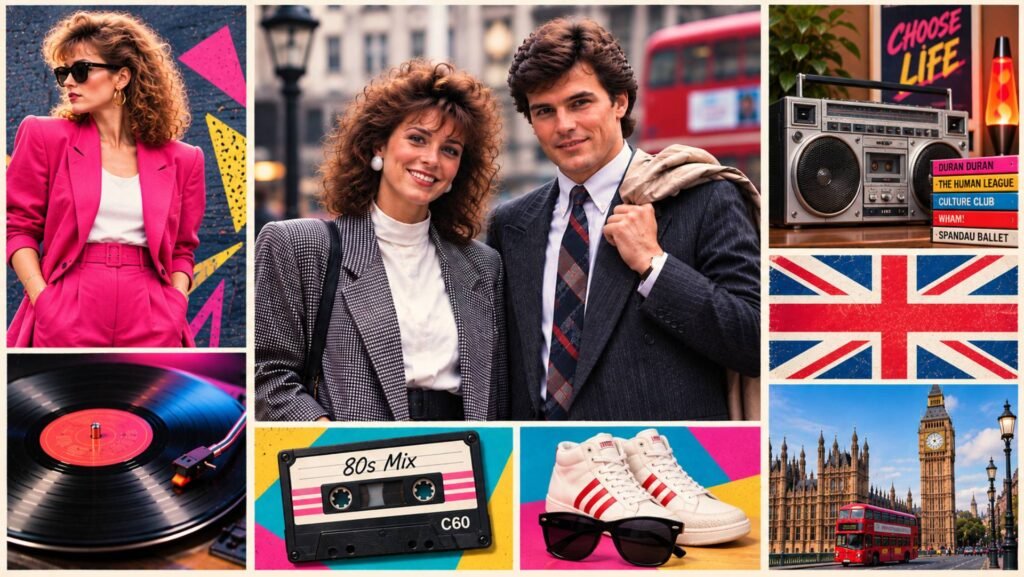
The 1980s never disappeared completely. Its music stayed on radio playlists, its films became comfort viewing, and its clothes kept reappearing in wardrobes whenever fashion needed another dose of confidence.
What feels different now is the revival’s breadth. Young shoppers are wearing oversized blazers and double denim without having lived through the decade. Vinyl records sit beside streaming subscriptions. Retro arcades are being reimagined as social venues, while AI tools allow anyone to place themselves inside an imaginary 1980s family album.
Britain played an important part in shaping the original decade. British 1980s Trends such as New Romantic style, synth-pop, post-punk, home computing and distinctive high-street fashion all became part of its visual identity. Today, those influences are returning in updated forms rather than as exact copies.
Some revivals are easy to see in fashion collections and record sales. Others survive as smaller cultural movements, vintage interests or social-media aesthetics. Together, they show how a decade once dismissed as excessive has become a rich source of modern inspiration.
Table Of Contents
- 1. Power Suits and Strong Shoulders
- 2. Double Denim
- 3. Shell Suits and Retro Sportswear
- 4. Mullets, Perms and Feathered Fringes
- 5. New Romantic Style
- 6. Vinyl Records
- 7. Cassette Tapes
- 8. Analogue and Instant Photography
- 9. Classic Arcade Gaming
- 10. Home Computers and Pixel Graphics
- Why Are British 1980s Trends Returning?
- How to Enjoy the Revival Without Looking Like Fancy Dress
- FAQs
Here are 15 Popular UK Trends from the 80s that are finding new audiences today
1. Power Suits and Strong Shoulders
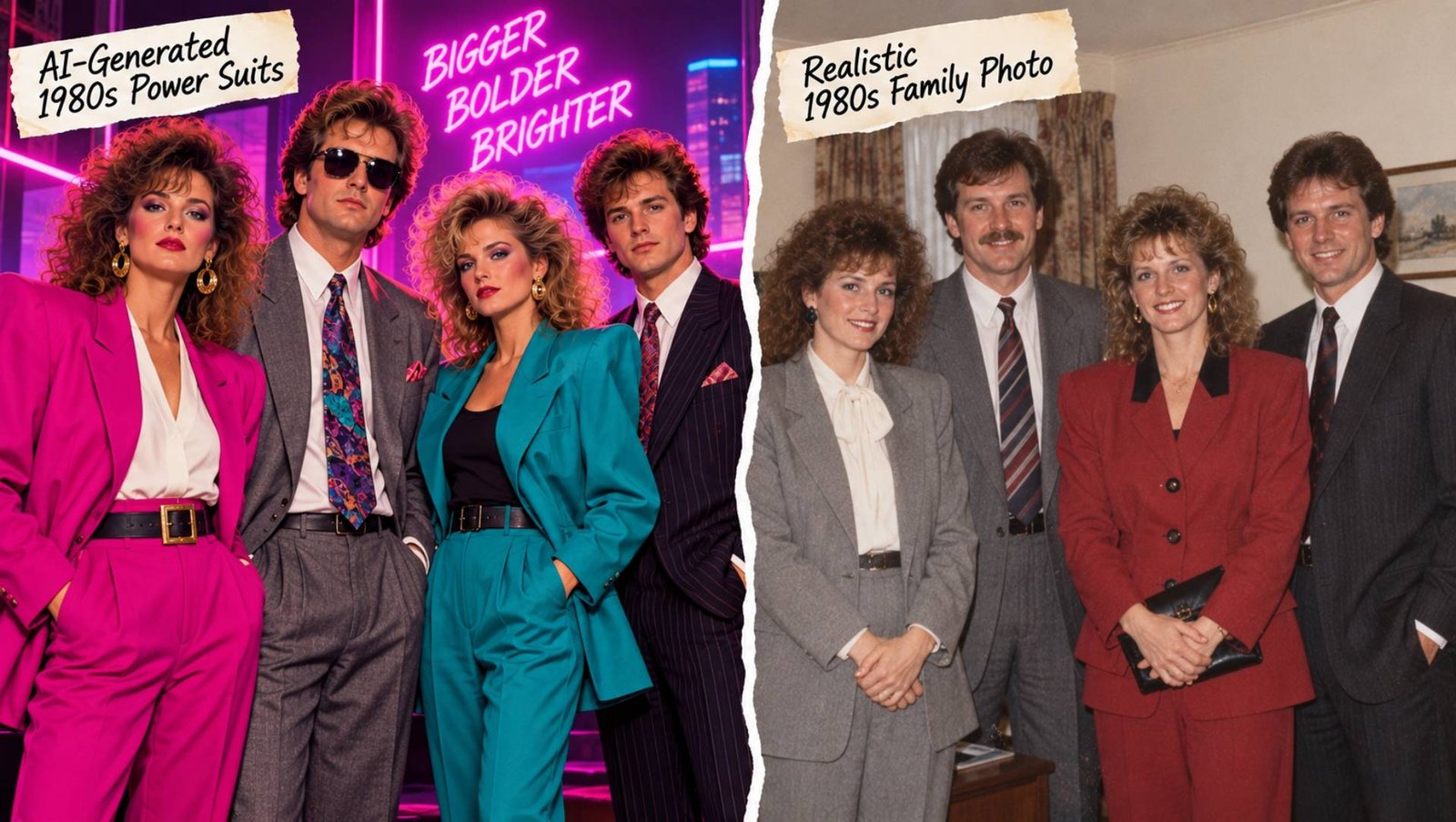
The structured silhouette remains part of Iconic 80s British Style, particularly when modern outfits reinterpret rather than copy the original look. Its structure was deliberate: broad shoulders, a defined waist and a polished finish created a commanding silhouette.
The modern revival keeps the confidence but loosens the rules. Oversized blazers are now worn with jeans, trainers, shorts or simple dresses rather than only as part of a formal matching suit. Shoulder structure has returned without requiring the wearer to resemble a boardroom character from a television drama.
Contemporary designers have also revisited metallic fabrics, sharp tailoring and bold proportions associated with the period. Fashion coverage in 2025 identified power suits and strong shoulders among the decade’s returning influences.
How to wear it now: Choose one structured blazer and keep the rest of the outfit simple. The shape should look intentional, not like fancy dress.
2. Double Denim
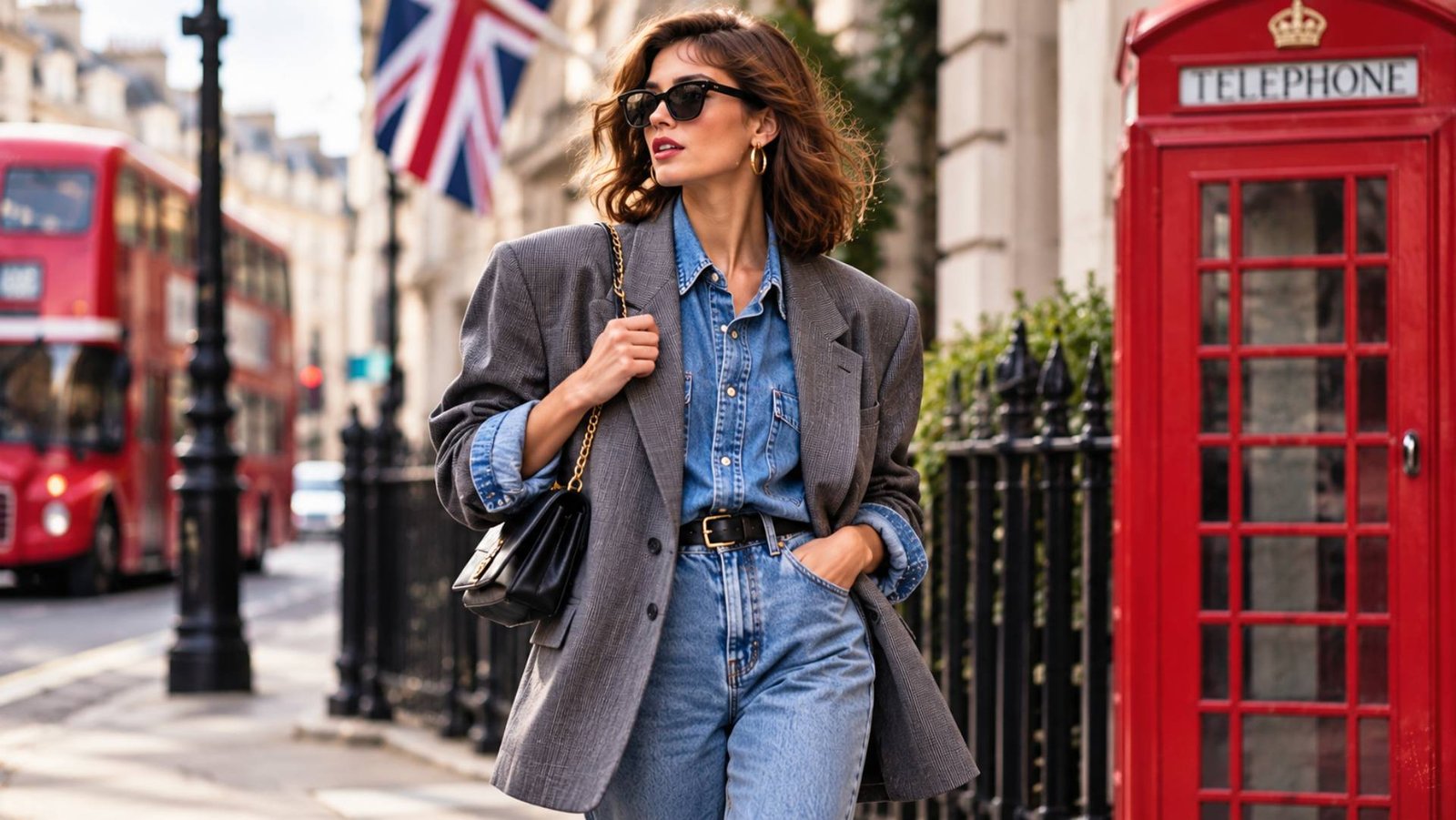
Denim jackets worn with jeans were a familiar part of casual 1980s style. The combination moved through music, youth culture and everyday wardrobes, although it was sometimes treated as a fashion mistake in later years.
Double denim has returned because modern styling is less concerned with perfectly matching every shade. A faded jacket can sit above dark indigo jeans, while an oversized shirt can be combined with a straight or relaxed leg. Different washes make the outfit feel layered rather than uniform.
The appeal is practical and nostalgic. Denim is durable, widely available and easy to adapt. Vintage pieces also let shoppers join the trend without buying a completely new outfit.
How to wear it now: Mix two washes and break up the look with a plain T-shirt, knit or belt. Avoid adding every other 1980s accessory at once.
3. Shell Suits and Retro Sportswear
The shell suit became one of the decade’s most memorable casual pieces and remains an example of 1980s UK Fashion Trends. Lightweight synthetic fabric, colour-block panels and matching jackets and trousers made it instantly recognisable.
Its reputation has changed several times. Once fashionable, then widely mocked, it has returned through retro sportswear, festival outfits, football-inspired clothing and streetwear. Modern versions often borrow the colour blocking and relaxed shape without recreating the original’s highly shiny fabric.
These pieces show how Classic 80s Trends can return through modern sportswear without requiring a complete retro outfit. These clothes suit today’s preference for comfort, but their stripes, panels and colours still carry a clear connection to the past.
How to wear it now: Use either the jacket or trousers as the focal point. A complete matching set works best when the rest of the styling is restrained.
4. Mullets, Perms and Feathered Fringes
British hairstyles in the 1980s were rarely afraid of volume. Perms, mullets, crimped sections, feathered fringes and carefully shaped quiffs appeared across pop culture and ordinary life.
This softer approach is typical of British Retro Trends, where recognisable 1980s features are adapted for modern tastes. Contemporary perms tend to create loose movement rather than tightly uniform curls. Feathered layers have also found a new audience through face-framing cuts.
Social media has made bold hair changes easy to discover and share. What once looked dated can suddenly feel expressive when adapted to a different generation.
How to try it now: Take inspiration from the shape rather than copying an old photograph exactly. Texture, maintenance and suitability for your hair matter more than historical accuracy.
5. New Romantic Style
Britain’s New Romantic movement made dressing up into a creative performance. Ruffled shirts, make-up, military details, dramatic silhouettes, historical references and carefully constructed hair produced a look that resisted ordinary categories.
Its modern influence appears in gender-fluid styling, theatrical eveningwear, statement blouses, pearl details and the freedom to mix masculine and feminine clothes. The revival is less about recreating a nightclub scene and more about treating personal style as storytelling.
New Romantic fashion also feels relevant because it valued transformation. Clothes and make-up let people invent a character rather than follow a conventional uniform.
How to wear it now: Begin with one expressive element, such as a ruffled shirt, brooch, velvet jacket or dramatic eye look. Let it carry the outfit.
6. Vinyl Records
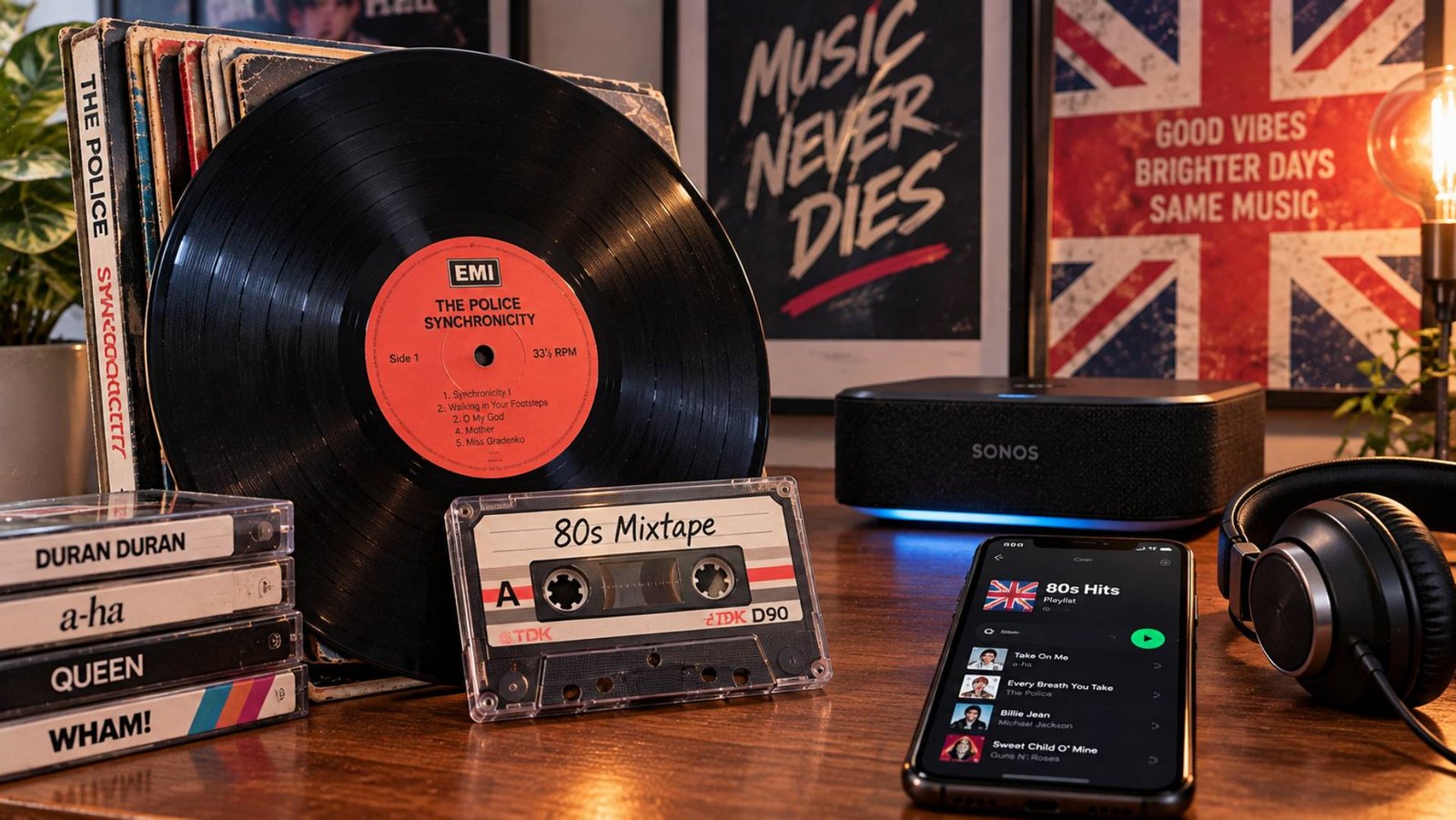
Vinyl is the clearest example of an old format reentering modern life. Streaming offers speed and convenience, but records provide a physical object, large-scale artwork and a listening ritual.
The UK revival is supported by more than sentiment. Industry reporting showed that vinyl spending continued to grow in 2024, helping physical music remain culturally and commercially relevant. New albums are routinely released on vinyl, while second-hand record shops and fairs attract both long-time collectors and younger listeners.
The experience is deliberately slower. A listener chooses a record, handles it carefully, lowers the stylus and hears the album in sequence. In a world of endless digital choice, that limitation can feel refreshing.
Why it works now: Vinyl turns music into an event and gives fans something tangible to own. The appeal is not that it replaces streaming, but that it offers a different relationship with music.
7. Cassette Tapes
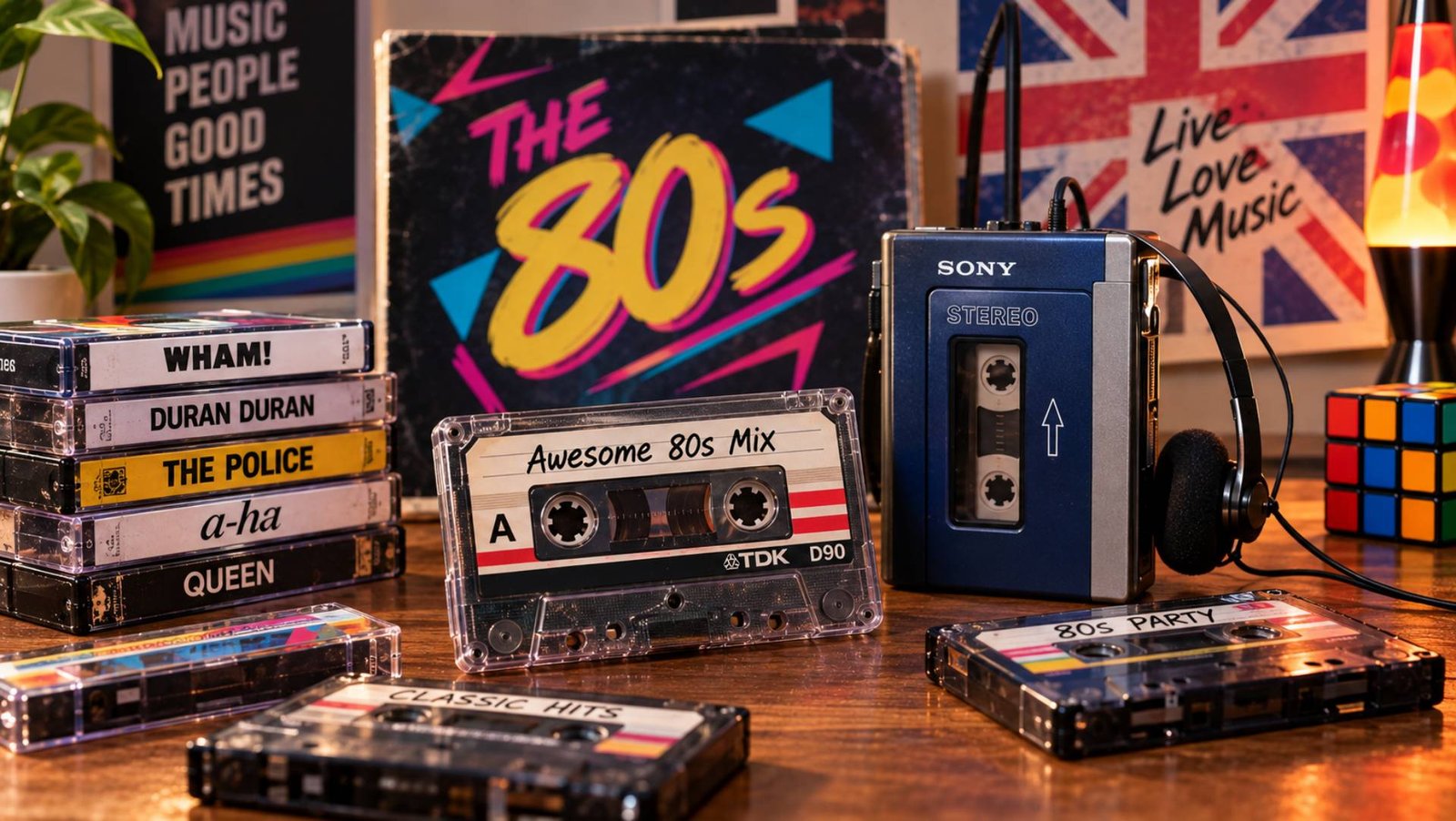
Cassettes have not returned on the same scale as vinyl, but they have reappeared as collectable objects, limited-edition releases and symbols of personal music culture.
In the 1980s, tapes were portable, recordable and social. People created mixtapes, copied albums, recorded songs from the radio and carried music between home, car and portable player. The handwritten track list was part of the experience.
Today’s cassette revival draws on that intimacy. Independent musicians can produce small runs, while established artists use tapes as affordable merchandise or collectable editions. The format is imperfect, but that physical imperfection is part of its charm.
Why it works now: A cassette feels personal and handmade in a way that a digital playlist does not, even when both serve a similar emotional purpose.
8. Analogue and Instant Photography
Digital cameras made photography fast, cheap and almost unlimited. Analogue photography offers the opposite: a restricted number of exposures, no immediate preview and a delay before seeing the result.
That uncertainty has become attractive again. Film cameras, instant prints and disposable-camera aesthetics encourage people to photograph more deliberately. Even smartphone apps imitate grain, direct flash, date stamps, light leaks and faded colour.
The revival also reflects dissatisfaction with perfectly polished images. A slightly blurred photograph taken by a friend can feel more truthful than a heavily edited portrait designed for social media.
The British 1980s family-album look is particularly popular: ordinary sitting rooms, seaside holidays, birthdays and Christmas gatherings photographed with direct flash and imperfect framing.
How to capture the look: Use candid composition, natural skin texture and restrained film effects. Heavy scratches and extreme orange colouring usually look artificial.
9. Classic Arcade Gaming
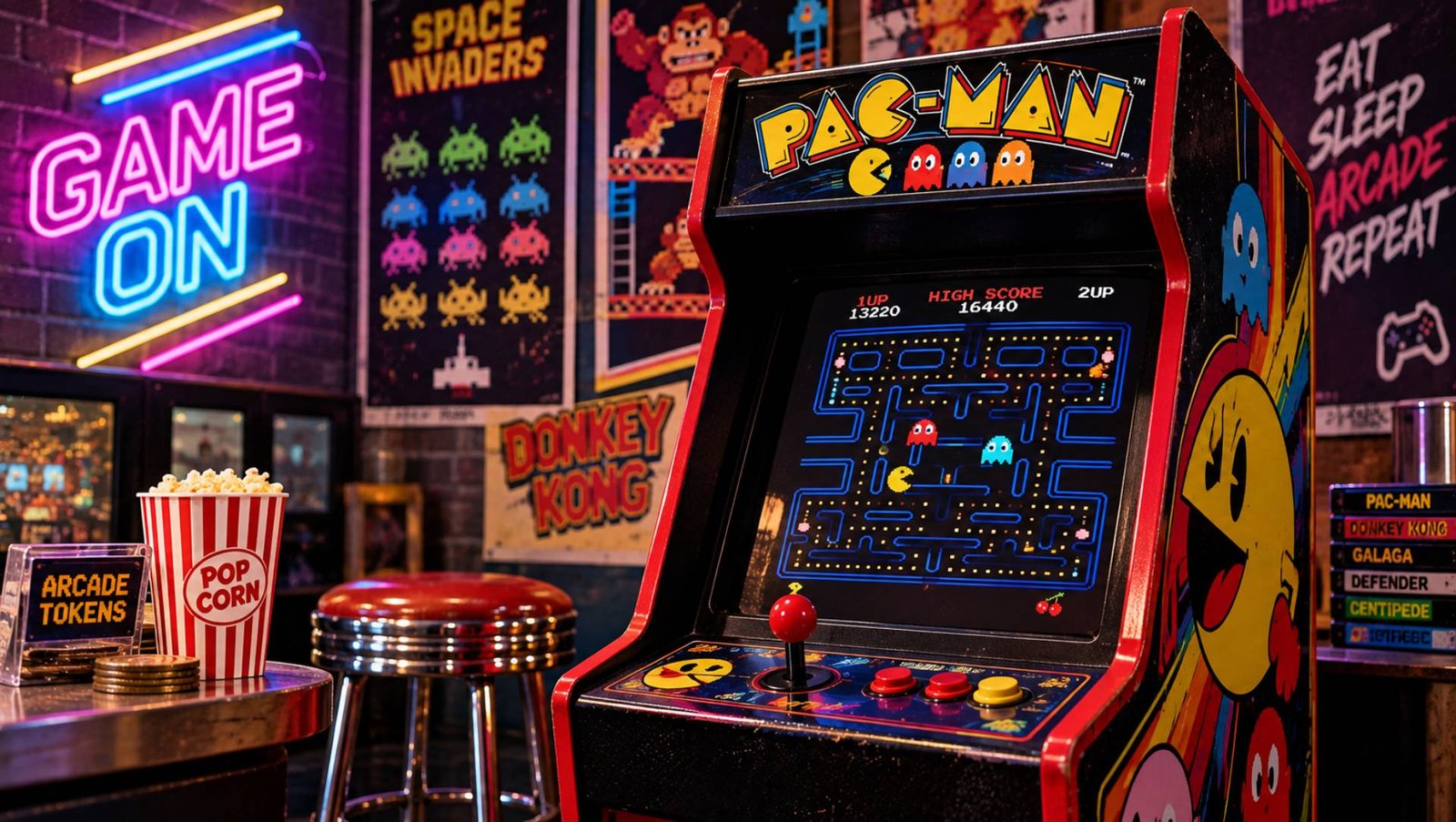
Arcades gave 1980s players an experience that home technology could not yet match. Bright cabinets, physical controls and the pressure of spending another coin turned gaming into a public activity.
Retro gaming now survives through restored machines, bar-and-arcade venues, compact cabinets, reissued consoles and modern hardware that plays older games. The latest devices often add current screens and connectivity while keeping joysticks, buttons and cabinet shapes that recall the original experience.
The social element is central to the revival. Playing a quick competitive game beside friends feels different from joining an online match from separate homes. Modern entertainment venues increasingly mix arcade machines with food, drinks and other group activities.
Why it works now: Classic arcade games are easy to understand, difficult to master and enjoyable in short sessions. They also bring different generations together without requiring a long tutorial.
10. Home Computers and Pixel Graphics
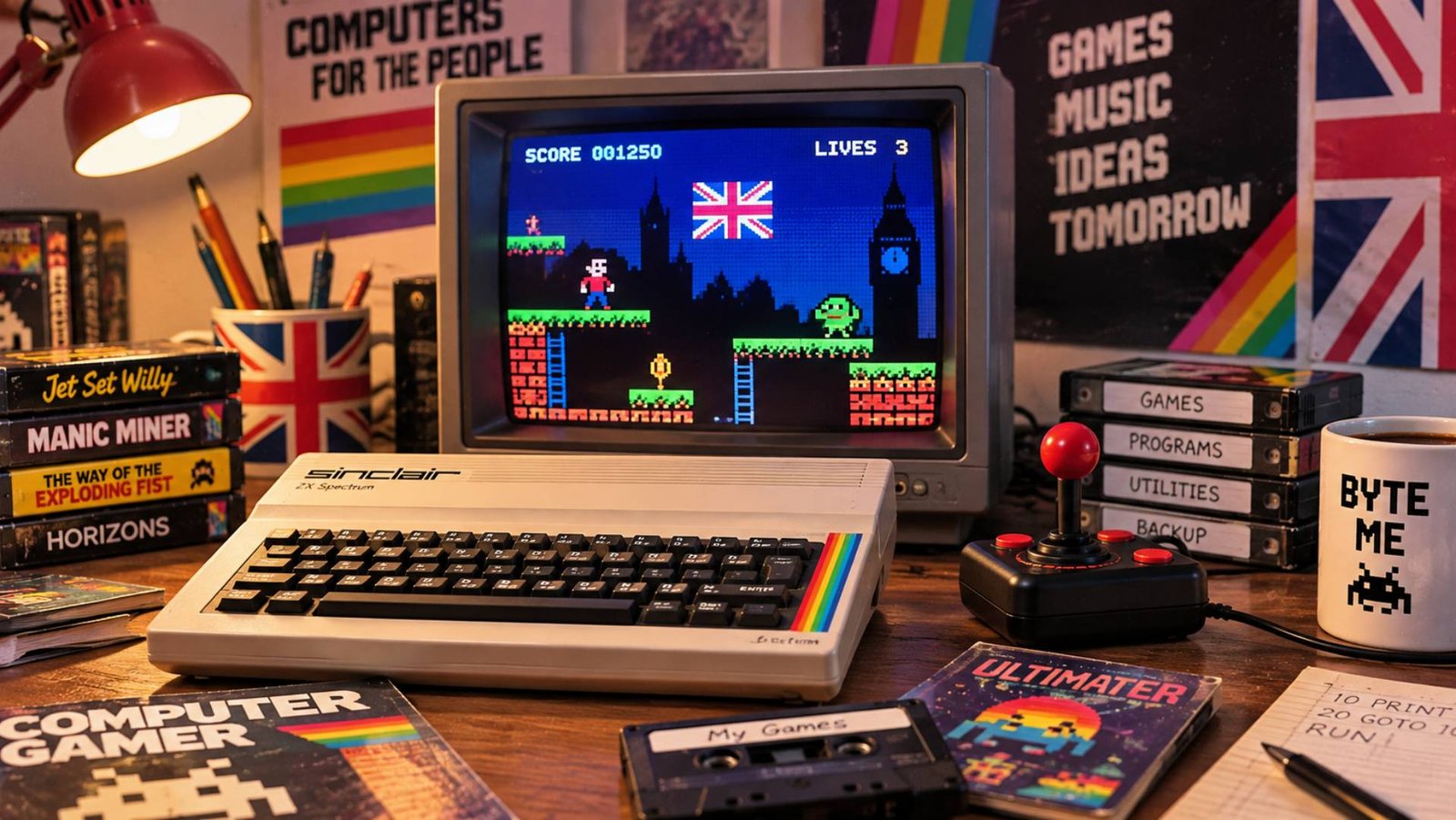
For many British households, the 1980s introduced the idea that a computer could belong in the home. Machines such as the ZX Spectrum and BBC Micro helped turn programming and gaming into everyday interests rather than distant technical activities.
Their influence remains visible in retro-computing communities, miniature reissues, coding projects and independent games built around pixel art. Blocky graphics that once resulted from hardware limitations are now chosen as an artistic style.
Pixel design succeeds because it leaves room for imagination. A few carefully arranged shapes can suggest a character, city or entire world. It is also immediately readable on icons, merchandise and small screens.
The revival is not only visual. Enthusiasts restore original machines, write new software for old hardware and preserve games that might otherwise disappear.
Why it works now: Early home computing represents experimentation. Users were encouraged to type, build, modify and learn rather than only consume finished apps.
11. Neon Colours and Bold Interiors
The popular image of the 1980s is full of electric pink, cobalt blue, purple light and geometric shapes. Real British homes were often much browner, creamier and more floral than this stereotype suggests, but bold colour did have a place in fashion, graphics, clubs and youthful interiors.
Today, the influence appears through colour-block walls, statement lamps, wavy mirrors, Memphis-inspired patterns and playful accessories. Rather than covering an entire room in neon, designers tend to use a vivid chair, print, lamp or painted section as a focal point.
Curves and irregular shapes have also returned after years dominated by restrained minimalism. The result feels warmer and more individual, even when the reference is not explicitly described as 1980s.
How to use it now: Add one bright colour and one graphic form to a neutral room. A few confident choices usually work better than a full themed makeover.
12. British Synth-Pop
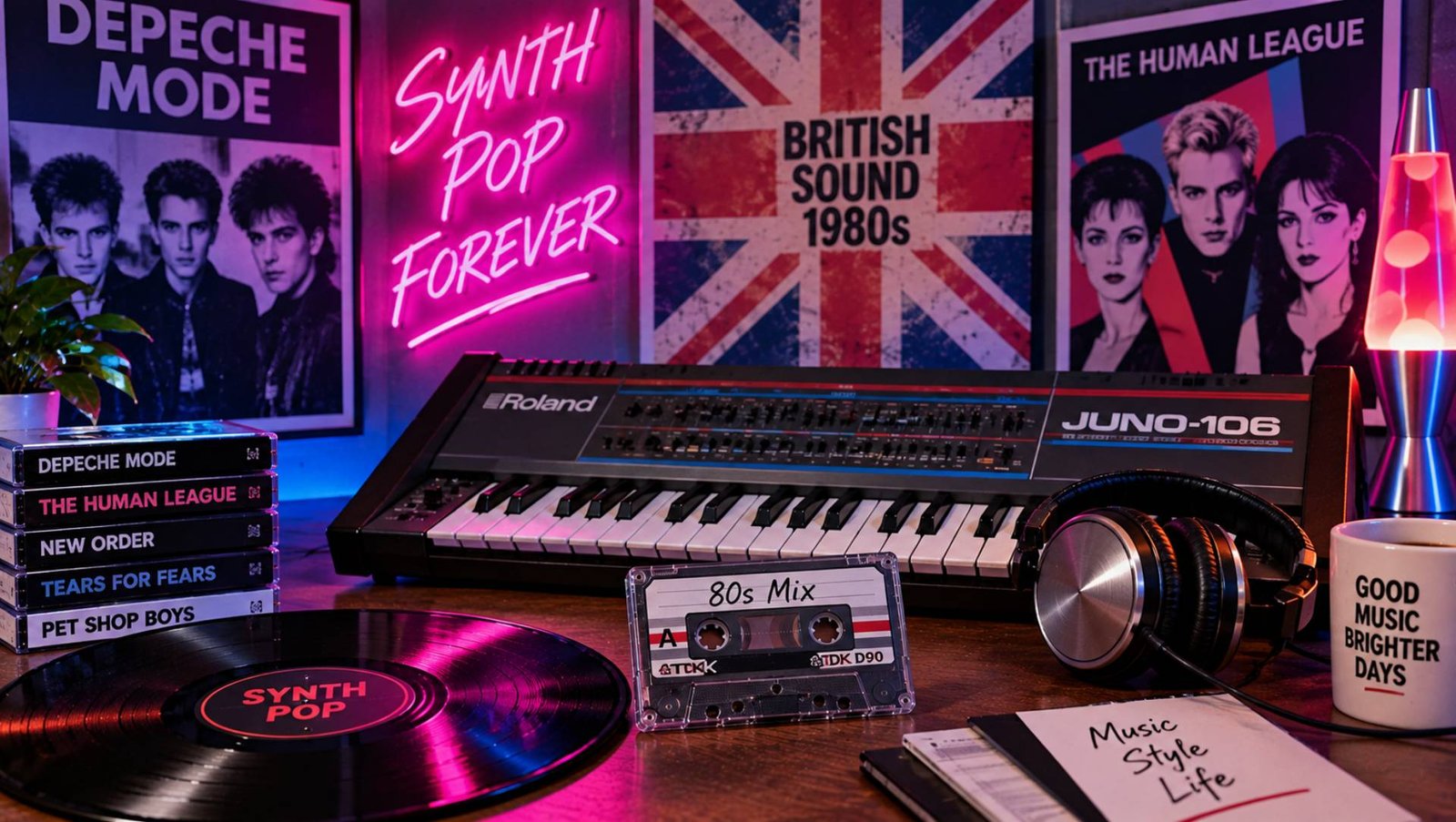
British synth-pop gave electronic instruments an emotional and highly accessible voice. Its influence stretched across music, fashion, video and graphic design. Synthesised melodies could sound futuristic, melancholic, romantic or sharply danceable.
The style still influences new pop music. Modern artists use analogue-style synthesisers, drum-machine textures and spacious production without necessarily making strict revival records. Film, television and advertising also return to these sounds whenever they want to evoke suspense, futurism or nostalgia.
The revival works because the original music already imagined the future. Its combination of technology and emotion still feels contemporary, even when the equipment or production reference is decades old.
How to explore it: Listen beyond a greatest-hits playlist. British electronic music in the decade ranged from polished chart pop to darker post-punk experiments and club-focused sounds.
13. Vintage High-Street Style
Together, these details helped create a Vintage British Style that is now being revisited through clothing, interiors, signage and design. It was both practical and social.
Although the retail landscape has changed dramatically, its visual identity is being rediscovered through vintage signage, archive shopping bags, deadstock clothing and nostalgia for shops that no longer exist. Online communities share photographs of former town centres and compare changing shopfronts.
The revival is partly affectionate and partly critical. People remember browsing records or clothes, but they also recognise that high streets were not uniformly attractive. Mismatched signs, delivery vans, queues and ordinary local businesses were part of the scene.
Modern brands use this nostalgia in packaging, typography and store design. The most convincing examples borrow the warmth and personality of the old high street without pretending the past was perfect.
Why it works now: It recalls a time when shopping was more physical, local and tied to particular places.
14. Roller Skating
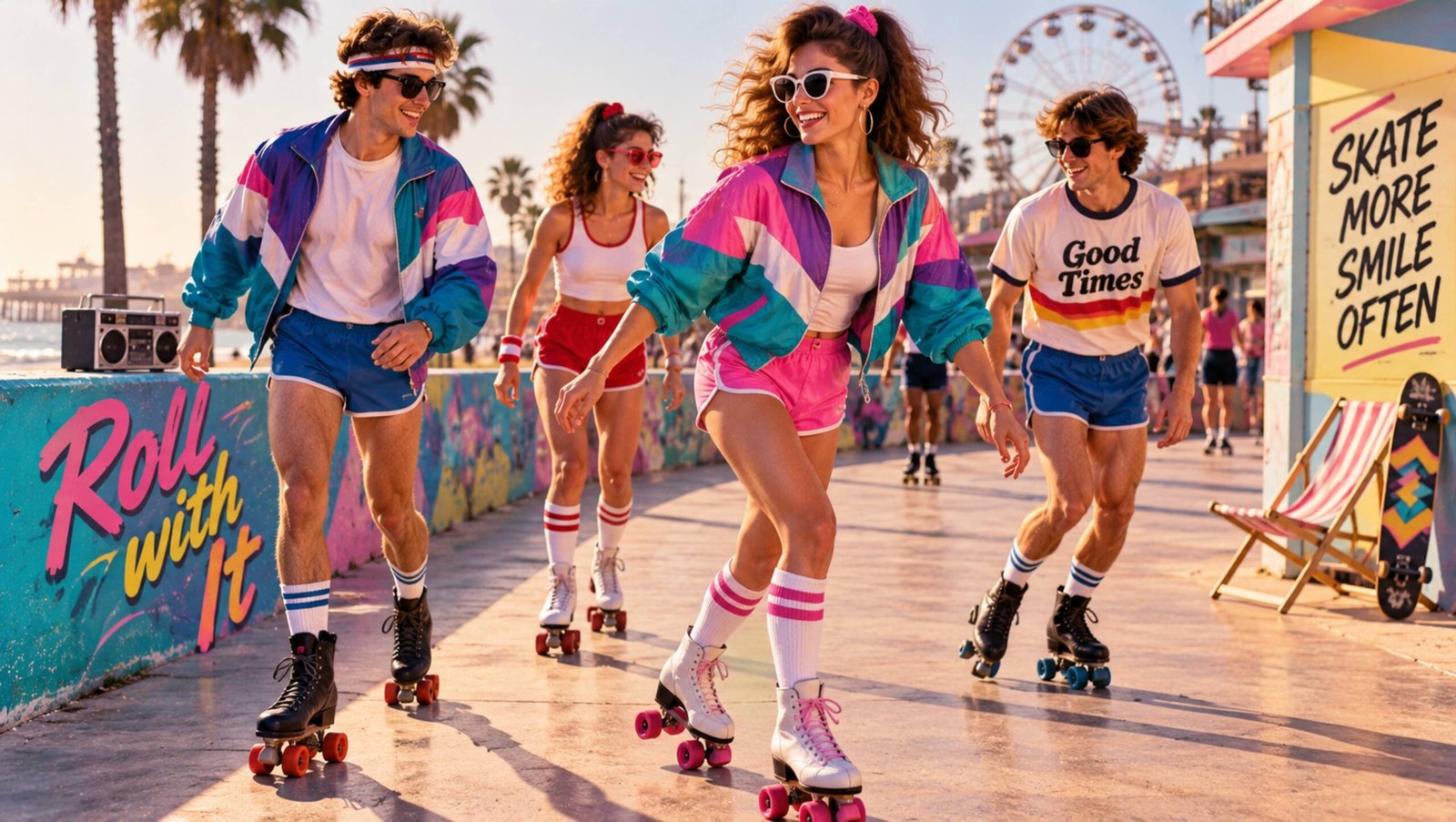
Roller skating combines movement, music, fashion and social contact, which helps explain why it repeatedly returns. The activity has links with several decades, but bright sportswear, rink culture and dance routines give its modern revival a particularly strong 1980s flavour.
Today’s skating community includes indoor sessions, outdoor meet-ups, dance skating and beginner classes. Social video has made the activity visible to people who may never have visited a traditional rink.
The attraction is not purely nostalgic. Skating is active without feeling like a conventional gym routine. Progress is visible, music matters, and participants can develop an individual style.
How to start: Use proper protective equipment, learn on a smooth, controlled surface and focus on balance and stopping before trying dance moves.
15. AI-Generated 1980s Portraits
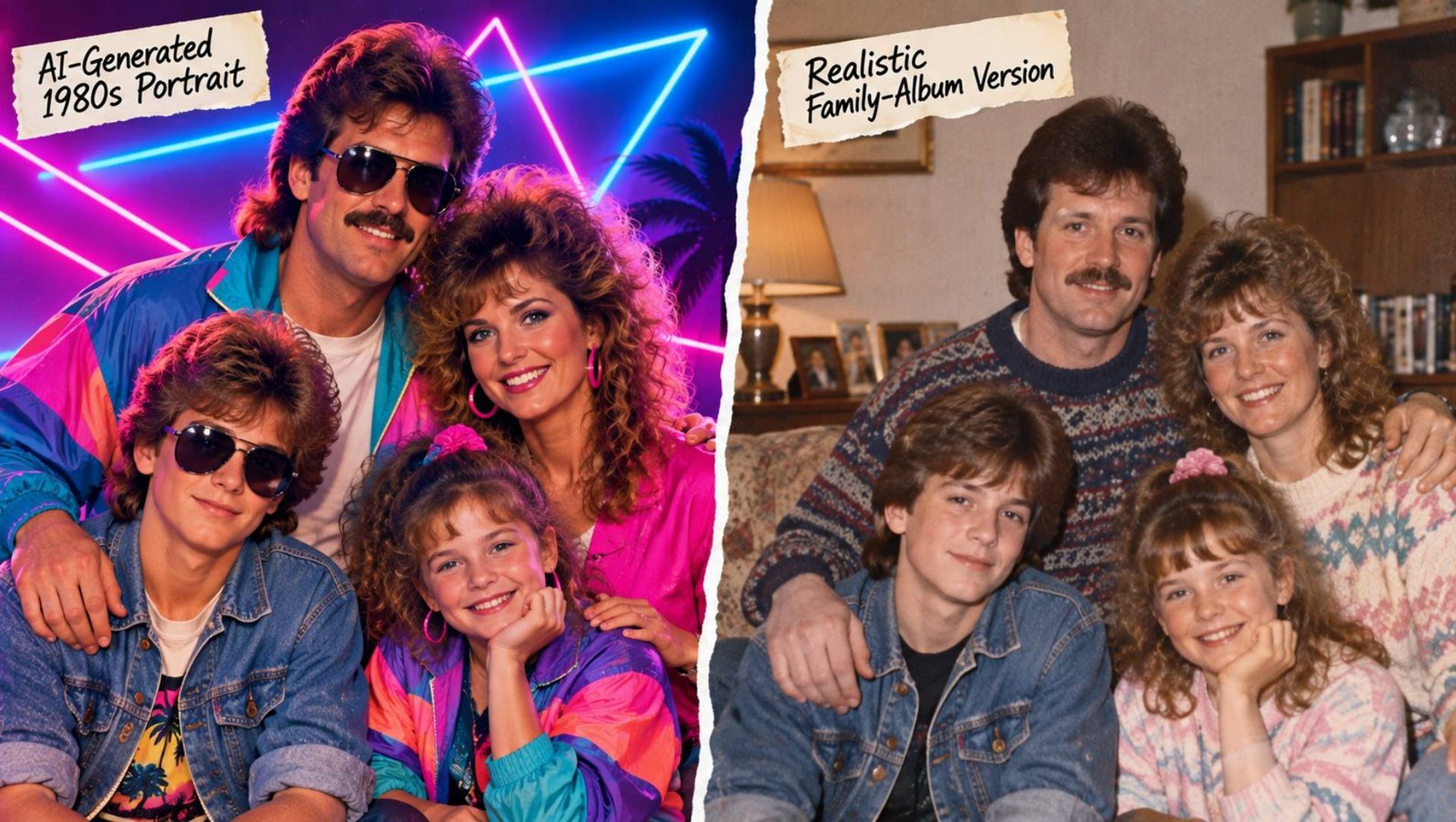
The newest 1980s trend could not have existed during the decade itself. AI image tools now allow people to upload a photograph and imagine themselves in a British studio portrait, family sitting room, music scene or seaside holiday from forty years ago. You can have 25 ChatGPT Prompts for the ’80s Retro Look.
The format works because it combines personal identity with collective nostalgia. Someone who never owned a cassette player or visited a 1980s arcade can still see themselves inside that visual world.
However, AI tends to exaggerate. It fills rooms with neon lights, gives everyone celebrity hair and places too many famous gadgets in one scene. A believable image needs an exact year, a specific British setting, ordinary clothing and the photographic character of consumer film.
Users should also preserve natural facial features, obtain consent before uploading other people’s images and label generated portraits when they could be mistaken for genuine archive photographs.
How to try it well: Ask for a realistic 1985 British family snapshot with direct flash, everyday clothing, a modest sitting room and only three period objects. Exclude modern devices, cinematic lighting and excessive neon colour.
Why Are British 1980s Trends Returning?
The revival of 1980s Trends Making a Comeback is not driven by one cause.
Nostalgia Offers Familiarity
80s Nostalgia in Britain plays an important role in this revival. People who lived through the decade enjoy revisiting music, clothes and objects connected with their youth. Younger audiences experience the same material without the original associations, allowing them to treat it as something new.
Physical Objects Feel Meaningful
Vinyl, tapes, film photographs and arcade controls offer texture and limitation. They require more participation than tapping a screen and often create a stronger sense of ownership.
Fashion Moves in Cycles
Styles become unfashionable, disappear long enough to lose their negative associations and then return in revised form. The new version keeps the recognisable silhouette while changing fit, materials or styling.
Social Media Makes Old Culture Newly Visible
Archive photographs, music clips, vintage advertisements and restored technology can reach millions of viewers who did not encounter them the first time.
The Decade Was Visually Confident
Strong shapes, saturated colours and expressive styling stand out after periods dominated by minimalism. The 1980s gives designers and creators permission to be playful again.
How to Enjoy the Revival Without Looking Like Fancy Dress
The easiest approach is to choose one influence rather than recreate the decade from head to toe.
Wear a structured blazer with modern jeans. Add a vintage track jacket to a simple outfit. Place one geometric lamp in a neutral room. Buy a record you genuinely want to hear instead of treating vinyl as decoration.
The same principle applies to photographs and events. A convincing retro image needs a coherent year and setting. An enjoyable themed party needs music and details people can interact with, not only a wall of neon props.
The goal is reinterpretation. The most successful revivals take something recognisable from the past and give it a purpose in the present.
FAQs
Are 1980s trends really coming back?
Yes, but not all in the same way or at the same scale. Vinyl has a measurable commercial revival, while fashion, hairstyles, retro gaming and analogue photography appear through changing collections, communities and online culture.
Which 1980s fashion trend is easiest to wear today?
An oversized blazer is one of the easiest choices because it works with jeans, trousers, skirts and dresses. Double denim and vintage track jackets are also simple to adapt.
Why are younger people interested in the 1980s?
They encounter the decade through music, television, archive images, family photographs, vintage shops and social media. Because they did not experience it directly, its styles can feel fresh rather than dated.
Is vinyl genuinely popular in the UK again?
Yes. Vinyl remains smaller than streaming but has experienced sustained growth as a physical format. UK spending on vinyl rose again in 2024, supported by new releases as well as catalogue albums.
Are cassette tapes becoming mainstream again?
They remain a niche format. Their value lies mainly in collectability, small releases and the emotional appeal of mixtape culture rather than mass-market listening.
How can I create an authentic British 1980s AI portrait?
Specify an exact year, regional setting, ordinary clothing, a few believable objects and a consumer-film style. Ask the tool to preserve the person’s identity and remove modern items.
Were British homes really covered in neon colours?
No. Neon was more visible in fashion, graphics and nightlife than in most family sitting rooms. Many homes used brown, cream, floral and wood-effect furnishings, often mixed with possessions from earlier decades.
The 1980s Are Back, but They Have Changed
The decade’s return is not a perfect historical reconstruction. Modern power suits are easier to wear. Pixel graphics are now an artistic choice. Vinyl lives beside streaming, while AI creates retro photographs that never existed.
That transformation is precisely why the revival continues. People are not simply copying the past. British Trends Returning Today are being reshaped as people select the parts that still feel expressive, social or satisfyingly physical and adapt them to current life
Britain’s 1980s gave us confident tailoring, distinctive music, home-computer creativity and a culture unafraid of strong visual choices. Four decades later, those ideas still have enough energy to find new audiences.
The trick is to enjoy them without pretending the decade was one continuous neon party. The real 1980s were more varied, ordinary and interesting than the stereotype—and the best modern revivals understand the difference.